

In the field of electronic equipment manufacturing, convection ovens are widely used for soldering printed circuit boards (PCBs). Valued for their versatility, they nevertheless present significant challenges, particularly due to complex temperature management and the high risk of overheating, which can affect the quality of the solder joints and damage heat-sensitive components.
In response to these challenges, vapor phase ovens (also known as condensation soldering) emerge as a beneficial alternative. By applying more uniform heat and minimizing temperature variations, this technology offers an effective and reliable solution for applications requiring high precision.
Functioning of Vapor Phase Ovens (detailing the soldering process)
Vapor phase soldering distinctly differs from conventional methods such as convection soldering. Instead of heating the air or the entire area, this technique directly exposes the electronic component to hot steam. As this vapor condenses on the cooler printed circuit board, it releases a significant amount of latent heat very efficiently, heating the solder and melting the solder paste without overheating the components.
This method offers a thermal transfer capacity 10 to 100 times greater than that of hot air, allowing soldering at much lower temperatures and thus minimizing the risk of thermal damage to sensitive components.
The inert heat transfer medium used, perfluoropolyether (Galden®), allows for a heat transfer up to ten times higher than in convection soldering. This efficiency is particularly suitable for processing large boards or high-mass boards in a stable process atmosphere.
Soldering Process Steps
Vapor Phase: The board is then exposed to a flow of vapor generated from Galden® which gradually heats up, eliminating residual moisture and preparing the components for soldering. The vapor condenses on the cold board, releasing its heat uniformly, which heats the paste without exposing the components to extreme temperatures.
Wetting: The temperature is maintained to allow the solder paste to completely melt, thereby creating solid and reliable solder joints between the components and the board tracks.
Cooling: The board is then slowly and controlledly cooled to prevent thermal stresses that could cause cracks or other defects in the solder joints.

Why Choose Rehm Thermal Systems’ Condenso Series
The Condenso series from Rehm Thermal Systems stands out with its innovative approach to vapor phase soldering, offering substantial advantages for a variety of industrial applications, from aerospace engineering to LED manufacturing and power electronics. Here are some key benefits of this series, illustrating why it represents an optimal solution for modern PCB manufacturing needs.
Flexibility and Adaptability: Condenso systems can be integrated into a wide range of manufacturing environments, whether for batch operations, inline connections, or continuous soldering. This flexibility is essential to adapt to various production requirements, ensuring high process reliability in all contexts.
Precise Temperature and Pressure Control: The series uses a patented injection principle and temperature and pressure (vacuum) control for more accurate and versatile reflow profiling. This allows for optimal adjustment of the temperature/reflow profile for each assembly, ensuring reproducible soldering conditions that enhance process stability.
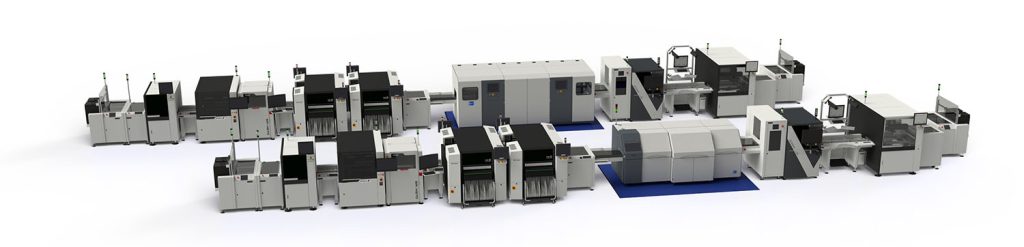
Vacuum Technology for Void-Free Results: The “vacuum” option available in all Condenso systems ensures virtually void-free joints. This feature is particularly beneficial for soldering power electronic components where lower void rates are required for optimal joint quality.
Energy Efficiency and Resource Conservation: Condenso systems are designed to be energy-efficient, with quick start-up times and reduced energy consumption compared to traditional reflow soldering methods. Additionally, Rehm uses a patented injection and suction principle with a filtration system that allows for 99% of Galden® to be reused, which is not only cost-effective but also environmentally friendly.
Hermetically Sealed Process Chamber: The soldering process takes place in a hermetically sealed process chamber, reducing vapor loss and enhancing thermal efficiency. This feature also ensures that the target temperature of the heating system remains constant, thus promoting reproducible, high-quality soldering results.
Reduced Maintenance and High-Quality Joints: With reduced maintenance needs and improved temperature and humidity management, Condenso systems offer increased reliability and longer equipment lifespan. The ability to monitor the process through an observation window or camera also allows for quick detection and correction of soldering defects.
Condenso Series: An Oven for Every Type of Production
Rehm Thermal Systems offers a complete range of vapor phase soldering systems tailored to a variety of electronic production needs. Here is an overview of the different models available, each designed to meet specific industry requirements.
CondensoXC: Compact and powerful, this system is ideal for applications requiring low throughput. Used in laboratories, small production lines, or for prototyping, the CondensoXC is a batch system that optimizes space while delivering high performance.


CondensoXM smart: A true all-rounder for electronic production, this inline system is designed for medium throughput. It incorporates automatic side loading/unloading with preassembled carriers, making it ideal for small and medium-sized series.
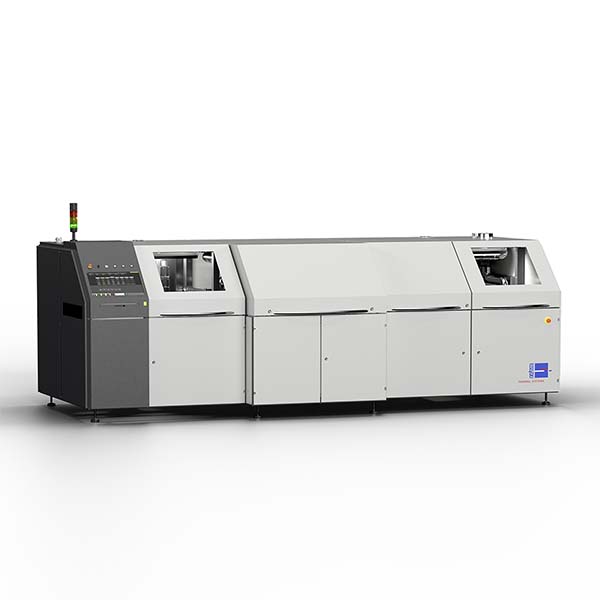
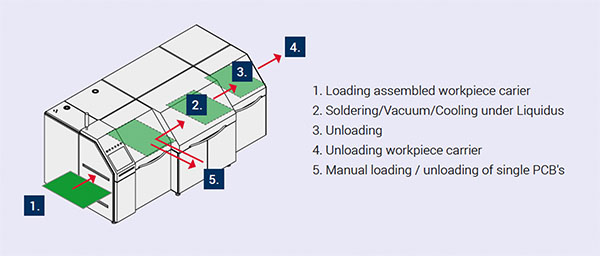
Condenso smartline: Perfect for large series production, this model connects inline and ensures medium throughput. With its automatic loading and internal carrier return transport, it is particularly used in series production, combining efficiency and automation.
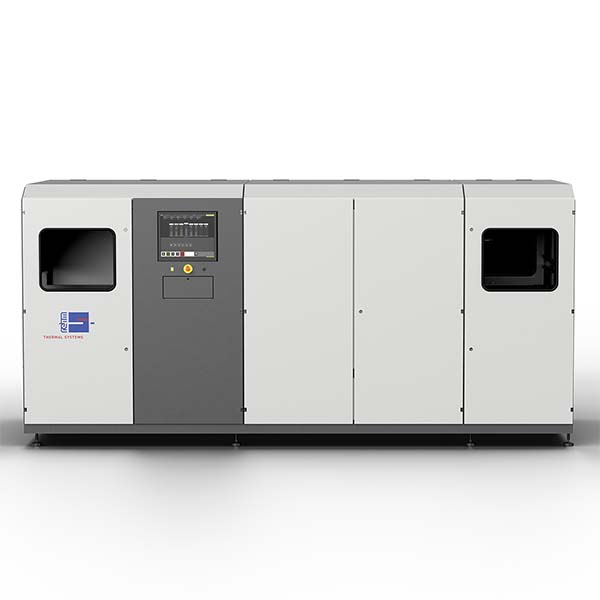
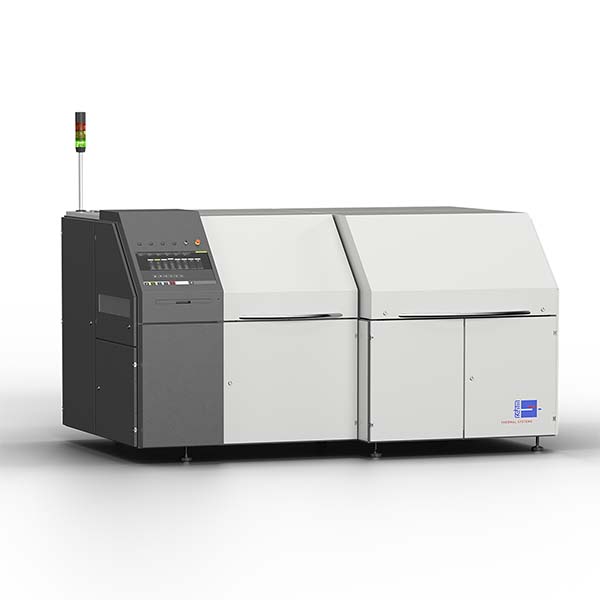
CondensoXS smart: Offering great performance with a small footprint, this system is ready for inline integration and suited to medium throughput. Its low space requirements make it ideal for small-series production, combining flexibility and efficiency.

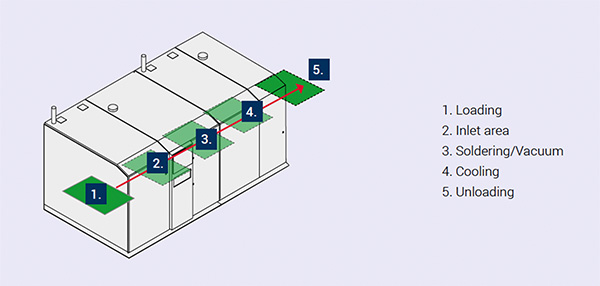
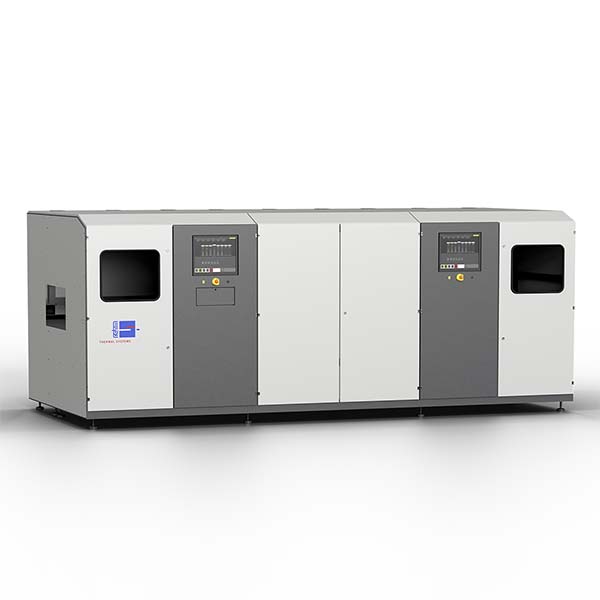
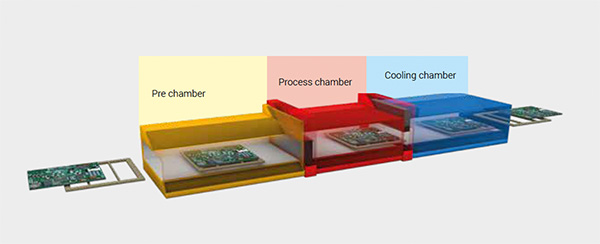
CondensoX-Line: Designed to be reliable in the through-feed process, this inline system is intended for high throughput. Equipped with a three-chamber system and built-in vacuum soldering capability, it is used for series manufacture and power electronics. The soldering process is fully inert under nitrogen, ensuring exceptional quality and reliability.

Each model in the Condenso series offers unique features to meet specific needs, from prototype development to large-scale production, ensuring superior solder quality and increased reliability at every stage.